

Compressed Natural Gas (CNG) is a fossil fuel and an eco-friendly, cleaner alternative to petrol and diesel. It primarily consists of methane, along with small quantities of other hydrocarbons.
CNG is widely used as a fuel for both commercial and non-commercial vehicles. It is compressed to a pressure of 200–250 kg/cm² to increase storage capacity in vehicles. Compared to diesel and petrol, CNG offers better fuel economy and results in reduced engine noise.
CNG is transported to stations through pipelines. At the station, it is compressed using compressors, stored in high-pressure cylinders, and dispensed into vehicles through fuel dispensers. The filling pressure in vehicles is generally limited to 200 bar (gauge).
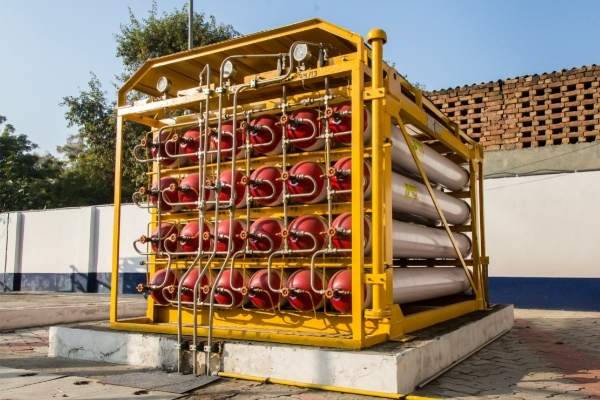
From lower running costs to cleaner air, CNG delivers real advantages for daily commuters, fleet operators and the environment.
Eco-friendly and environment-friendly fuel
Clean and green fuel with reduced harmful emissions (no lead or benzene)
Does not contaminate or dilute engine (crankcase) oil
Mixes easily and uniformly with air, ensuring efficient combustion
Lower chances of accidental ignition due to narrow flammability range (5%–15%)
Lower operational cost – significantly cheaper than petrol and diesel
Reduces carbon monoxide emissions
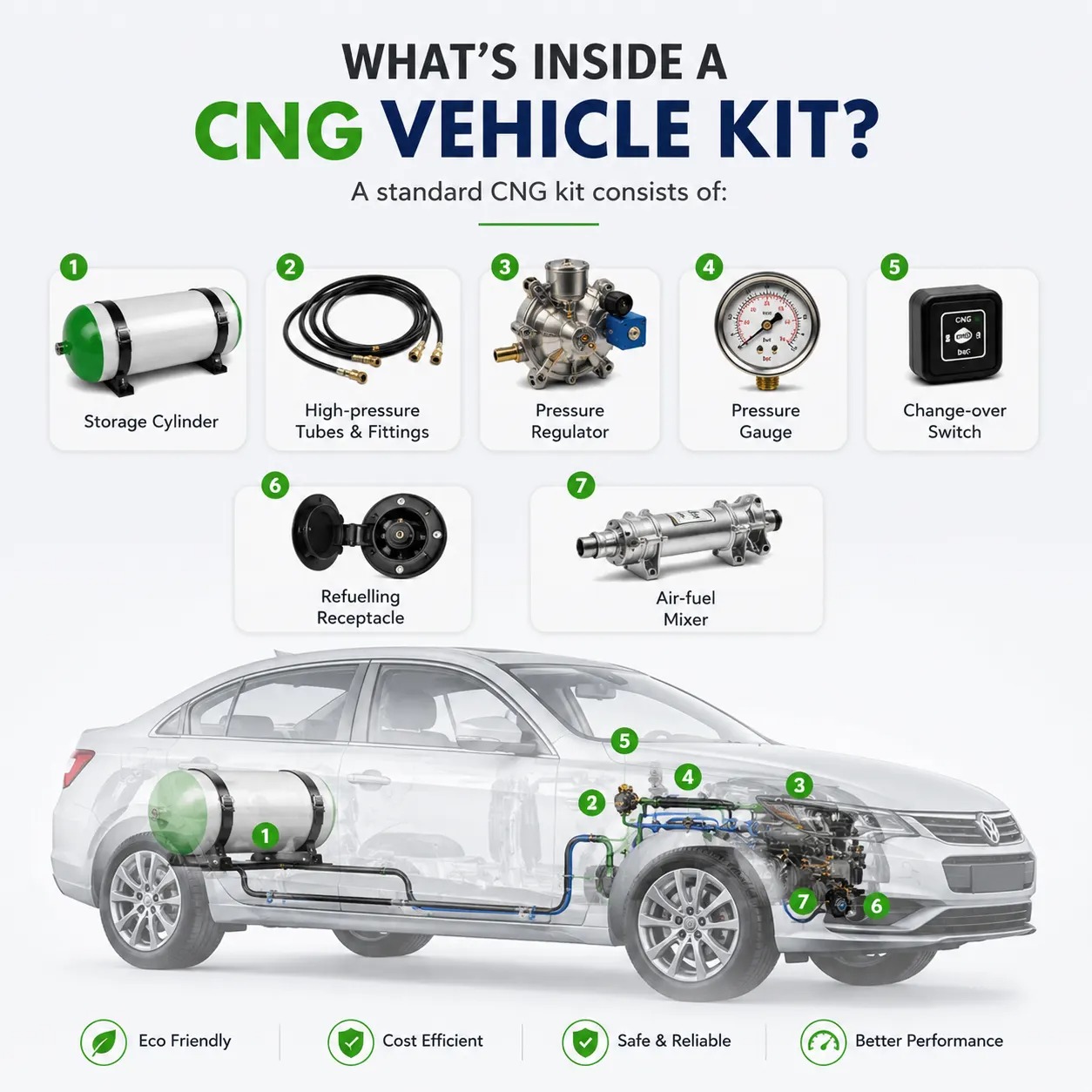
Suitable for installation in four-wheelers and most commercial vehicles
A standard CNG kit consists of:
CNG is inherently safe, but following these guidelines ensures your vehicle and fuel system remain secure at all times.
In case of any leakage, keep the vehicle at least 5 meters away from any ignition source.
Always use approved CNG cylinders from authorized manufacturers.
Ensure periodic hydro testing of cylinders as per safety regulations.
CNG kit must be insured along with the vehicle.
Maintain a valid Pollution Under Control (PUC) certificate as per government norms.
A technical comparison of CNG against petrol and diesel across key safety and performance properties.
| Property | Unit | Petrol | Diesel | CNG ★ |
|---|---|---|---|---|
| Relative DensityWater = 1 | — | 0.74 | 0.84 | — |
| Relative DensityAir = 1 | — | — | — | 0.64 |
| Auto-ignition Temperature | °C | 360 | 280 | 540 |
| Flammability Range | % in Air | 1 – 8 | 0.6 – 5.5 | 5 – 15 |
| Flame Temperature | °C | 2030 | 1780 | 1900 |
| Octane Number | — | 87 | — | 127 |